Ice makers are one of those appliances you never think about until it is 100 degrees outside and the freezer bin is empty. This service covers ice maker repair in Phoenix for both the built in units inside refrigerators and the standalone ice makers some people run separately in a garage or bar area. It is for anyone dealing with low ice production, a unit that leaks onto the floor, or an ice maker that just stopped making ice one day with no warning. Ice makers look simple from the outside but they depend on a water line, a fill valve, and a small mechanism that cycles water into a tray and freezes it on schedule. When any one piece of that chain fails, the whole thing stops working the way it should, and the fix depends on figuring out which piece actually broke.
Signs It Is Time For This Service
- Ice maker stopped producing ice completely
- Ice cubes are small, hollow, or oddly shaped
- Water leaking from the ice maker or freezer floor
- Ice has a bad taste or smell
- Ice maker makes loud grinding or buzzing noises
- Bin fills very slowly compared to before
The signs show up in a few common ways, and most people notice them before they notice the actual cause. The ice maker can stop producing ice completely, which is usually the most obvious problem. Sometimes the cubes come out small, hollow, or oddly shaped, which almost always points to a water flow issue rather than a broken motor. Water pooling under the freezer or leaking out the front is never a good sign and should not be ignored, since standing water near electrical components is a real risk. Occasionally the ice itself picks up a smell or a taste that was not there before, which usually means something upstream in the water supply needs attention. Each of these symptoms points toward a different part of the system, so narrowing it down early saves time later.
Before recommending anything, we look at the water supply line, the fill valve, and the ice maker mechanism itself, in that order. We ask when the problem started and whether it came on suddenly or got worse gradually, since that detail often tells us more than the symptom itself. A sudden stop usually means a part failed outright. A slow decline in ice production over weeks usually means a clog, a kink, or mineral buildup somewhere in the line. A lot of ice maker issues actually trace back to the water line or filter rather than the ice maker itself, so we check that first before assuming the mechanism is bad. This step alone rules out a good portion of the calls we get.

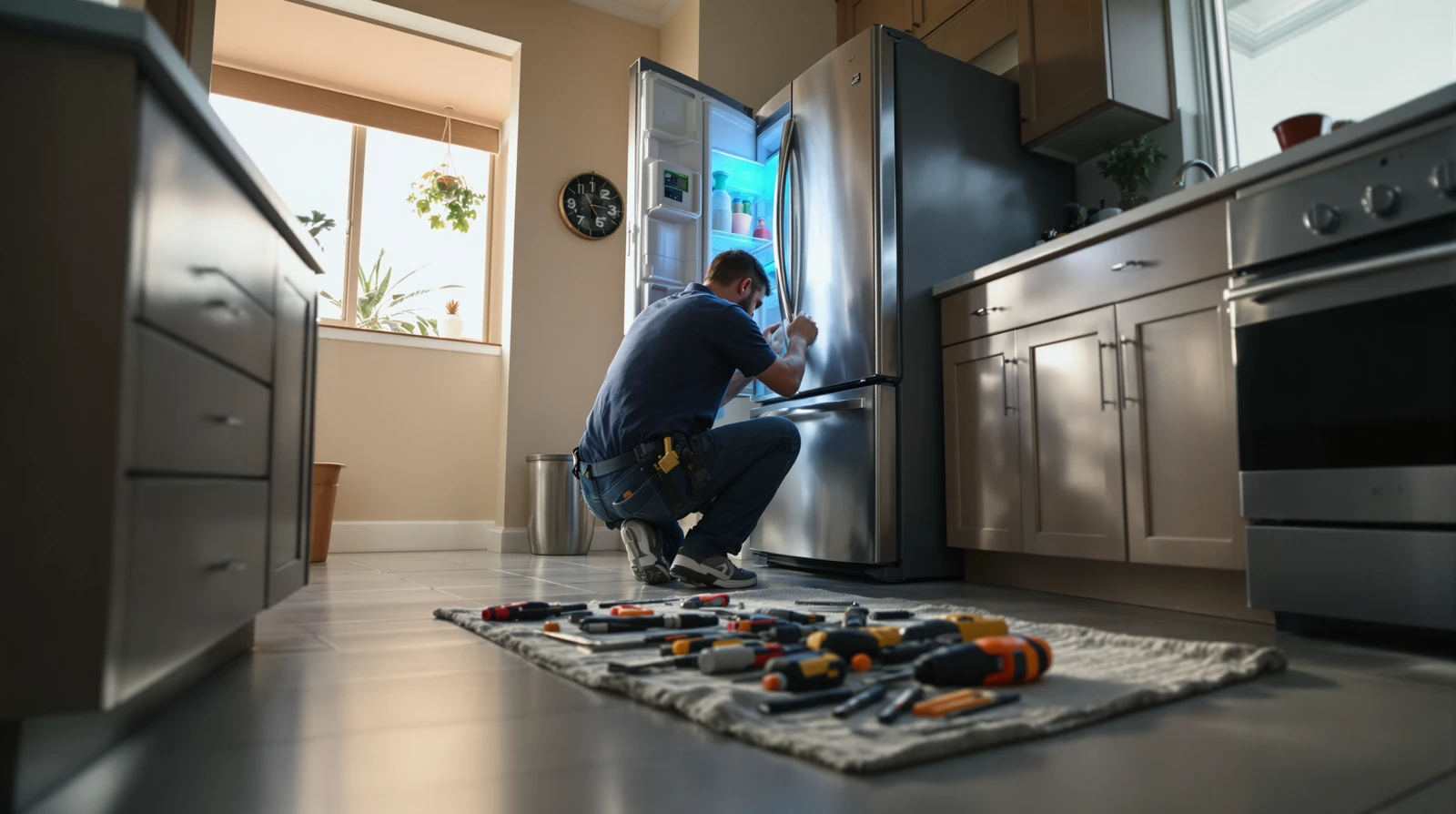
The repair work depends entirely on what is actually wrong once we get eyes on it. A clogged or frozen water line often just needs to be cleared or thawed out, which can solve the problem without replacing a single part. A bad fill valve usually needs replacing, since that part controls how much water enters the ice tray and when. If the ice maker module itself has failed, meaning the motor, the thermostat, or the internal timing mechanism, that is a bigger job and takes more time to diagnose and swap out correctly. For leaks, we trace the water back to its actual source rather than guessing, which could be a cracked line, a loose or corroded connection, or a clogged drain that is backing water up into places it should not be.
What changes the size of the job is mainly whether the problem sits in the water supply, the fill valve, or the ice maker module itself. Water supply and fill valve issues tend to be more straightforward since those parts are easier to reach and test. The ice maker module is a different story, especially in built in refrigerator ice makers, which can be tucked behind panels and require more disassembly to access than a standalone unit sitting out in the open. If the real issue turns out to be the water filter or low line pressure rather than the ice maker mechanism itself, that is usually a smaller and simpler fix. Figuring out which category the problem falls into early on is most of the battle in any ice maker repair visit.
While waiting on a repair, there are a few things worth checking yourself before anyone comes out. You can turn off the ice maker to stop a leak from getting worse, which also protects the floor and any nearby outlets from water damage. Check that the water line behind the fridge is not kinked or pinched against the wall, since that is an easy thing to rule out on your own and a surprisingly common cause of low ice production. If the ice tastes or smells off, do not keep using it until it has been checked, since that usually points to a line or filter issue that is worth addressing before it affects anything else in the water system. These small checks will not fix a broken module, but they can keep a small problem from turning into water damage or a bigger repair.
Ice makers in Phoenix homes work harder than people realize, especially during the hotter months when ice gets used constantly and the unit barely gets a break. That extra demand can expose a weak fill valve or a partially clogged line faster than it would in a milder climate, which is why ice maker complaints tend to cluster around certain times of year. Whether it is a built in refrigerator ice maker or a standalone unit, the troubleshooting process stays the same: check the water supply first, test the fill valve next, and only look at the ice maker module itself once those earlier parts are ruled out. That order keeps the diagnosis accurate and keeps us from replacing a part that was never the actual problem in the first place.
What to Tell Us When You Call
- Whether it's a built in fridge ice maker or a standalone unit
- What you're noticing, like no ice, leaking, or small cubes
- How long the problem has been going on
- If there is any water pooling or a smell you've noticed
