
In El Mirage, a lot of calls come down to a fridge that stopped cooling or a dryer running but putting out zero heat. We also hear from people whose dishwasher leaves everything dirty or will not drain at all. These problems do not usually fix themselves. A fridge that runs warm for even a day can mean spoiled food in the freezer and the main section both, since the two sides often share the same cooling system. A dryer that spins but never heats points to a different part failing than one that just hums and does not turn at all. We try to get these details over the phone so we are not showing up blind, and so you know roughly what kind of problem you are dealing with before a technician ever knocks on the door.
The appliances we repair most often around here are refrigerators, dryer repair jobs, and dishwashers. We also handle ovens and ranges, microwaves, and ice makers when those act up. A range that heats unevenly might have a bad igniter or a failing element, and that usually shows up as food burning on one side of the oven while the other stays raw. An ice maker that quit making ice could be frozen up inside, out of water, or just worn out after years of running. Microwaves that hum but do not heat often point to a part behind the control panel rather than anything you can see from the outside. We look at the actual unit instead of guessing over the phone, because two appliances with the same symptom can fail for completely different reasons once you open them up.

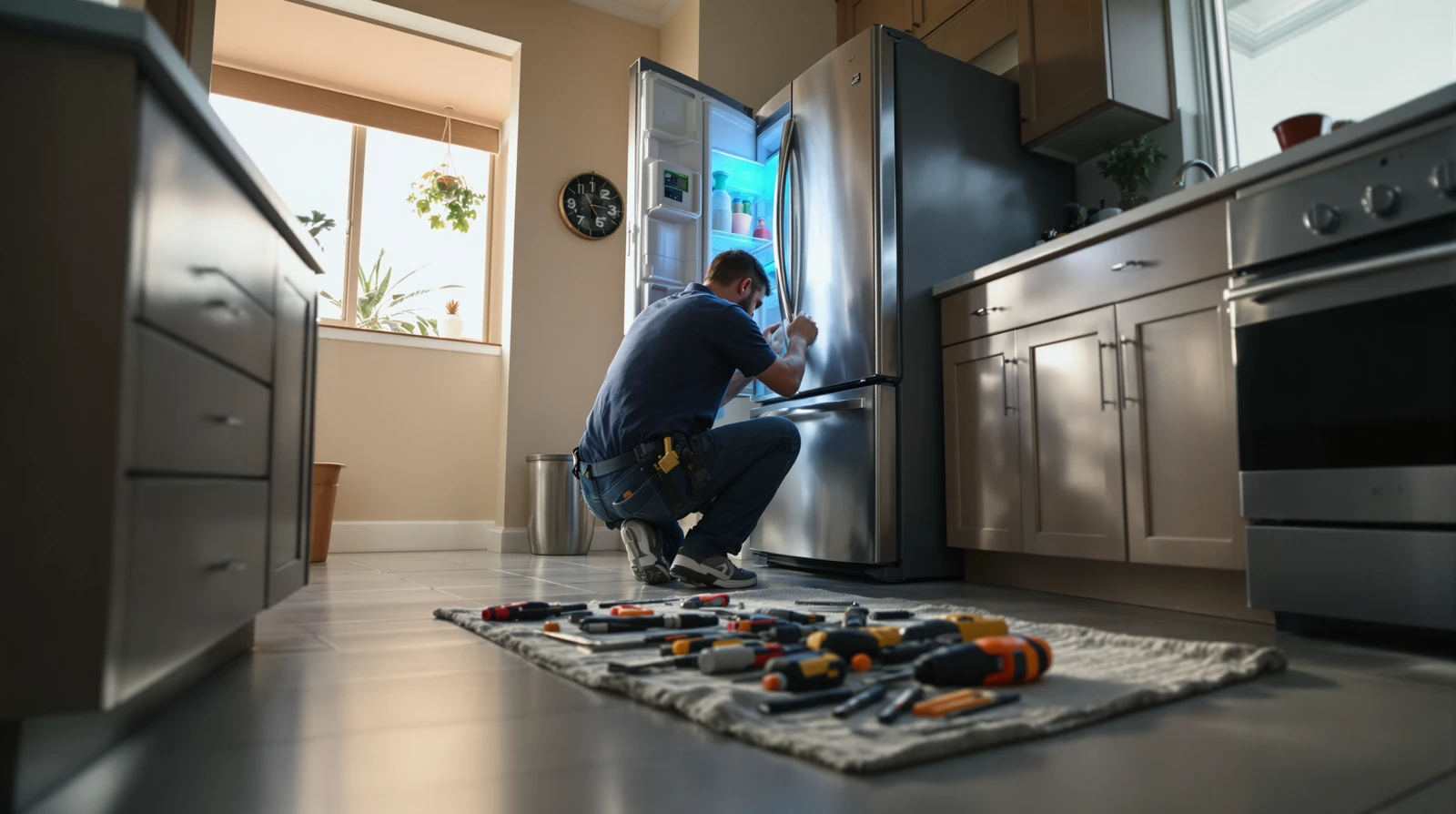
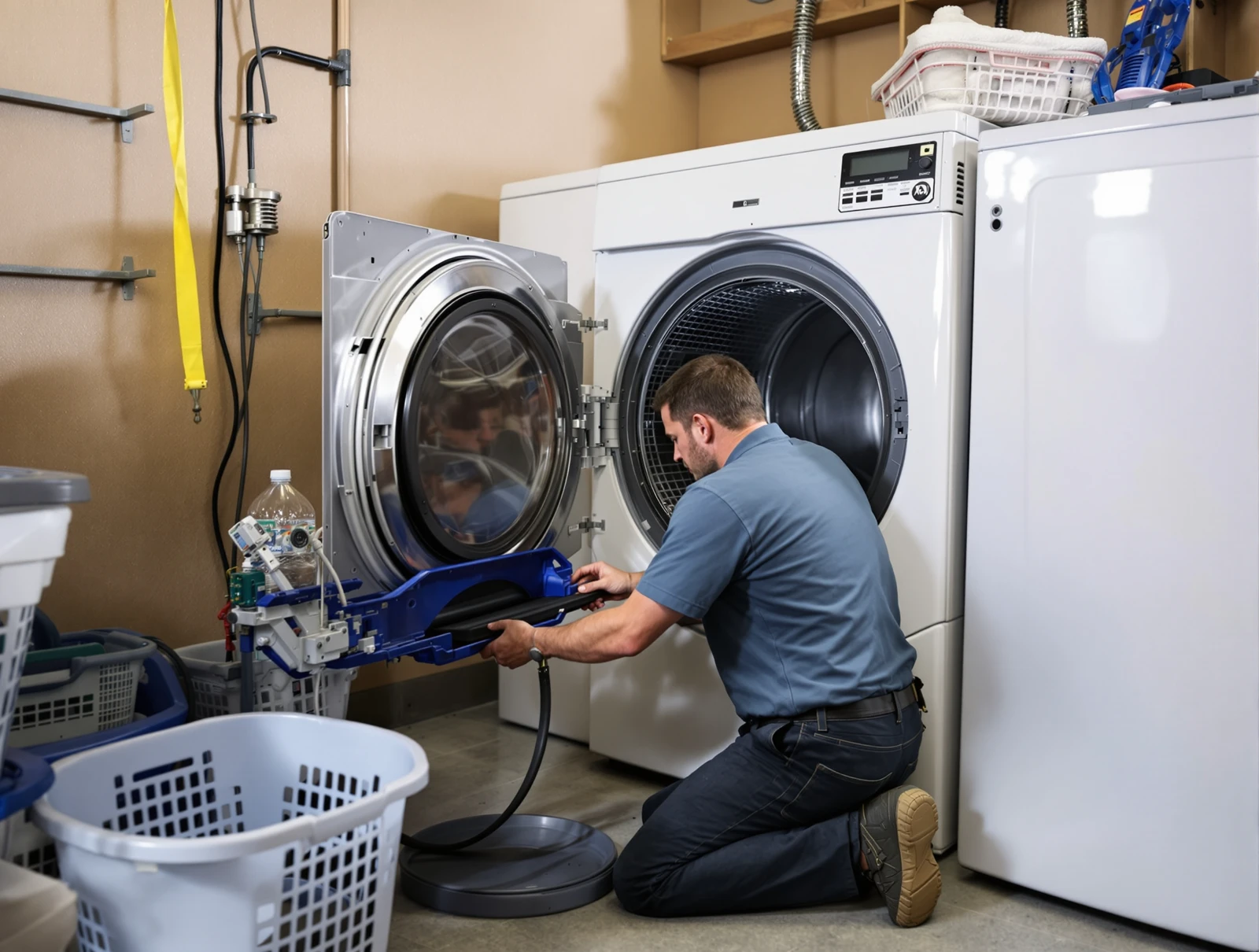
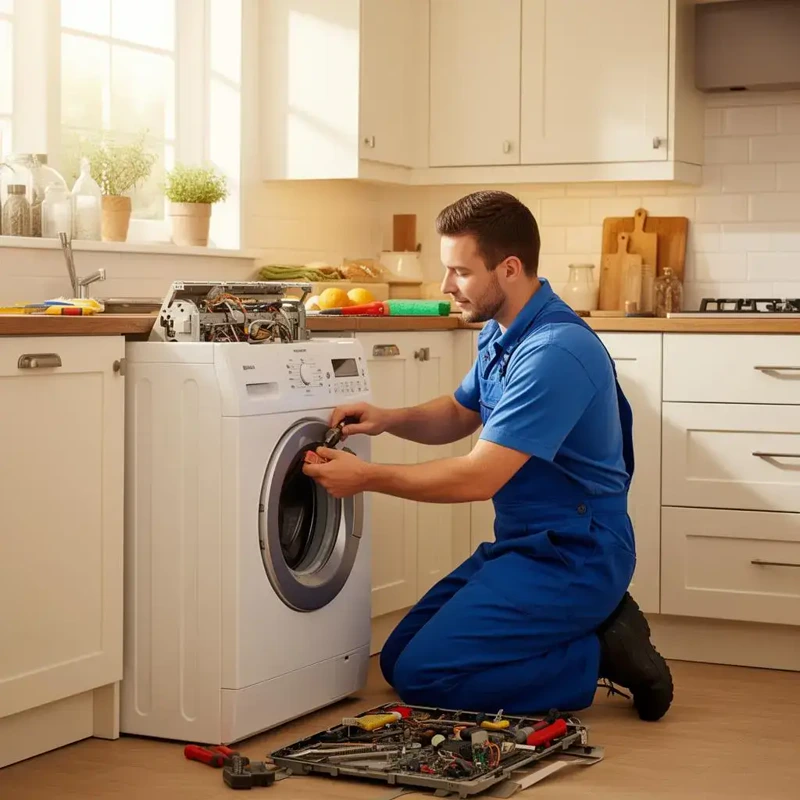
All the repair work happens at your place, not at a shop. A technician comes out, examines the appliance where it lives, whether that is built into a kitchen wall or sitting in a laundry room, and works on it there. That is the only practical way to deal with heavy appliances like ranges and refrigerators anyway, since pulling a built in oven out of a wall or hauling a full size fridge onto a truck creates more problems than it solves. Working on site also lets the technician see how the appliance is actually installed, what is around it, and whether something like a blocked vent or a loose connection behind the unit is part of what is going wrong, not just the part that is obviously broken.
It starts with a phone call describing the problem. From that call, we send a technician to look at the appliance in person. They check it, figure out what is actually wrong, and let you know what it will take to repair it. This matters because a lot of appliance symptoms can come from more than one cause. A dishwasher that will not drain could have a clogged line, a bad pump, or a stuck valve, and you cannot really tell which from across the kitchen. Once the technician has looked at the actual parts and confirmed what is failing, they explain it in plain terms. Once you are good with that, the repair happens on the spot during that same visit, so the appliance gets looked at and worked on without a lot of back and forth.
When you reach out, have the appliance brand and model number on hand if you can grab it, plus a simple rundown of the problem. That model number usually sits on a sticker inside the door or along the back panel, and it tells the technician exactly which parts the unit uses instead of just the general type. Tell us if the dryer is making noise, and whether that noise is a squeal, a thump, or a grinding sound, since each one points somewhere different. Tell us if the fridge is warm throughout or just in the freezer, because that changes which system is likely at fault. Tell us if the dishwasher leaks water on the floor during the wash, the rinse, or just sits in a puddle after it finishes. The clearer the description, the better prepared the technician is before they even arrive.
A lot of these problems share warning signs that are easy to miss until the appliance stops working completely. A fridge that is slowly losing its cool might first show up as a compressor running longer than usual, or frost building up somewhere it should not. A dryer heading toward a full stop sometimes starts with longer dry times before it quits producing heat altogether. Catching those early signs can mean a smaller repair instead of a bigger one, and it is part of why we ask detailed questions on that first call. We want to know what changed recently, when the problem started, and whether it has been getting worse, because that pattern tells the technician a lot before they ever touch a screwdriver.
El Mirage customers come to us for straightforward work on refrigerators, dryers, dishwashers, ovens and ranges, microwaves, and ice makers. Our reviews mention knowledgeable staff and quick fixes, which lines up with how we approach each call, by listening first and diagnosing in person second. We are easy to reach by phone to talk through what is going on with your appliance before scheduling anything, and that conversation is really the first step in figuring out what your unit needs. Whether it is a fridge running warm, a dryer that will not heat, or an oven that cooks unevenly, the path forward is the same, a call, a look in person, and a straight answer about what it will take to get the appliance working again.