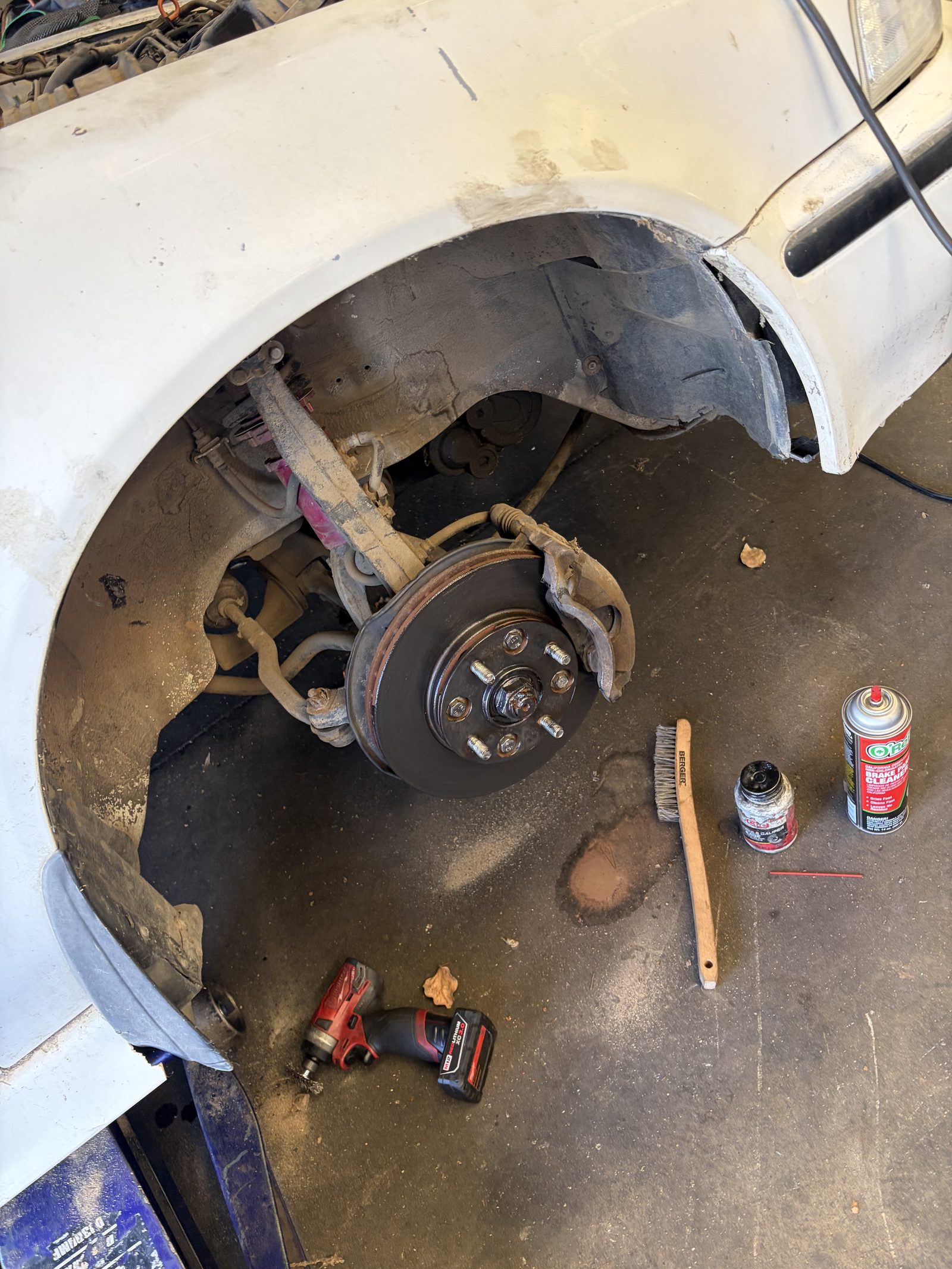
Your brake system turns pedal pressure into stopping force through pads, rotors, calipers, and fluid working together as one unit. Press the pedal and fluid pushes the caliper, the caliper squeezes the pads, and the pads clamp the rotor to slow the wheel down. Pads wear down with every stop you make, rotors wear down along with the pads, and fluid can pull in moisture over time just sitting in the lines. None of that is a surprise, it is just normal use catching up with the car. The trouble starts when a driver pushes past the warning signs and the metal backing on a pad starts eating into the rotor. At that point a simple pad swap turns into a rotor replacement, and the bill goes up for no good reason. We handle brake work for drivers across Kyle and the surrounding towns before small wear turns into bigger damage.
Signs You Need Brake Service
- Grinding or growling when you slow down
- A squeal that only happens when braking
- Pedal feels soft or sinks toward the floor
- Car pulls to one side when you brake
- Steering wheel shakes when stopping
- A burning smell after driving downhill or in traffic
Most people notice their brakes before they fail completely, if they are paying attention to the signs. A squeal is usually a wear indicator doing its job, a little metal tab built into the pad to warn you before it is too late. Grinding means you waited past that point and metal is now riding on metal. A soft or spongy pedal can mean air got into the fluid, moisture built up over time, or there is a leak somewhere in the system you have not spotted yet. A pull to one side under braking often means a caliper is sticking or dragging on just one wheel, forcing the car to pull toward the side that is grabbing harder. Any of these is worth a look before you put more miles on it, especially if you drive through Buda or San Marcos on a daily commute.
Before we replace anything we check the whole system, not just the part making noise or feeling off under your foot. That means looking at pad thickness on all four wheels, not just the ones that sound bad, since wear is rarely even side to side. We check rotor surface and thickness, test how the pedal feels under steady pressure, and look for fluid leaks at the calipers, the lines, and the fittings in between. We want to know why a part wore out, not just that it did. A sticking caliper will eat a brand new pad just as fast as it ate the old one, so replacing pads without fixing the caliper just means doing the job twice. This kind of full check is part of every brake inspection we run for drivers in Kyle and nearby.
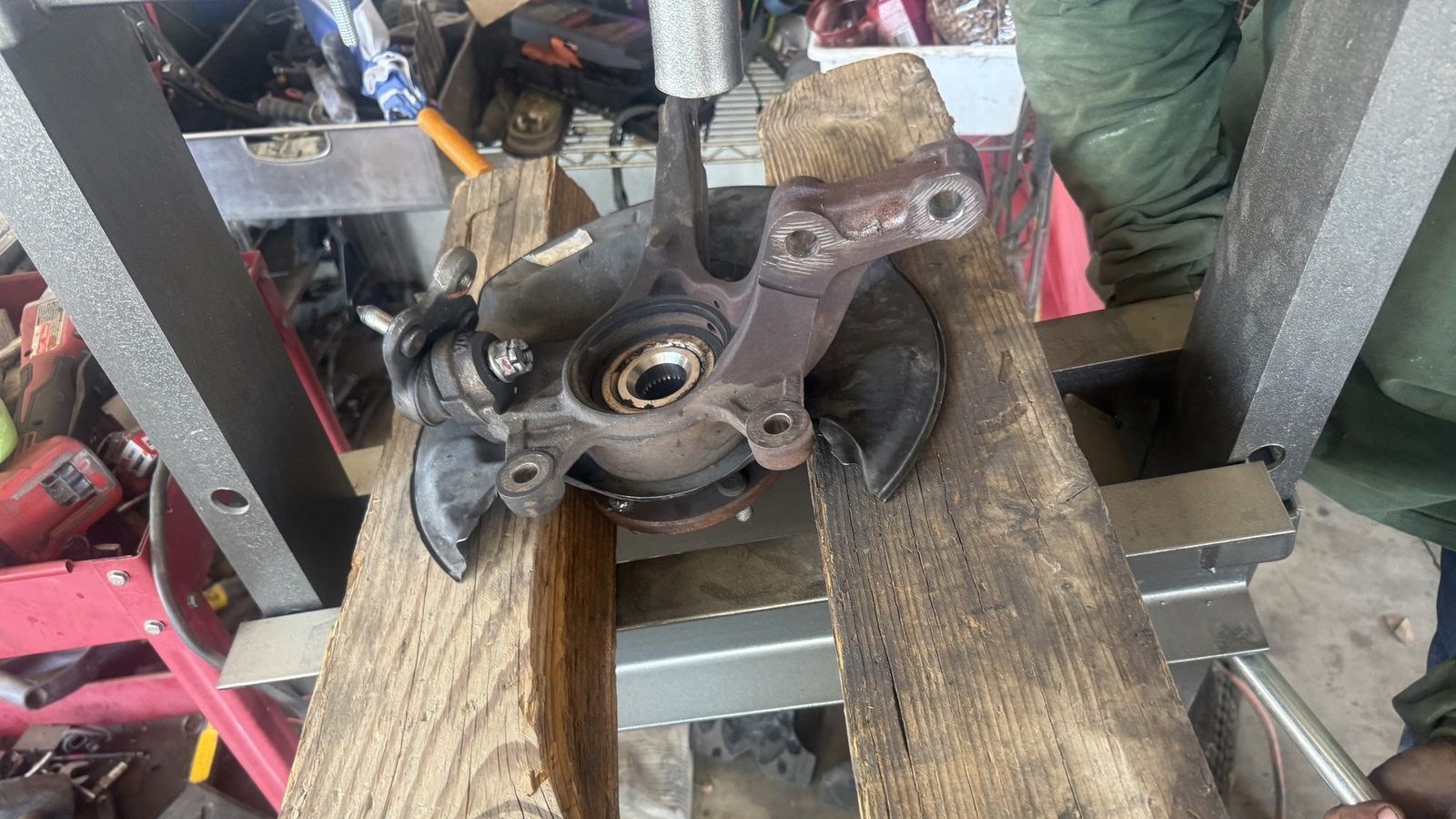
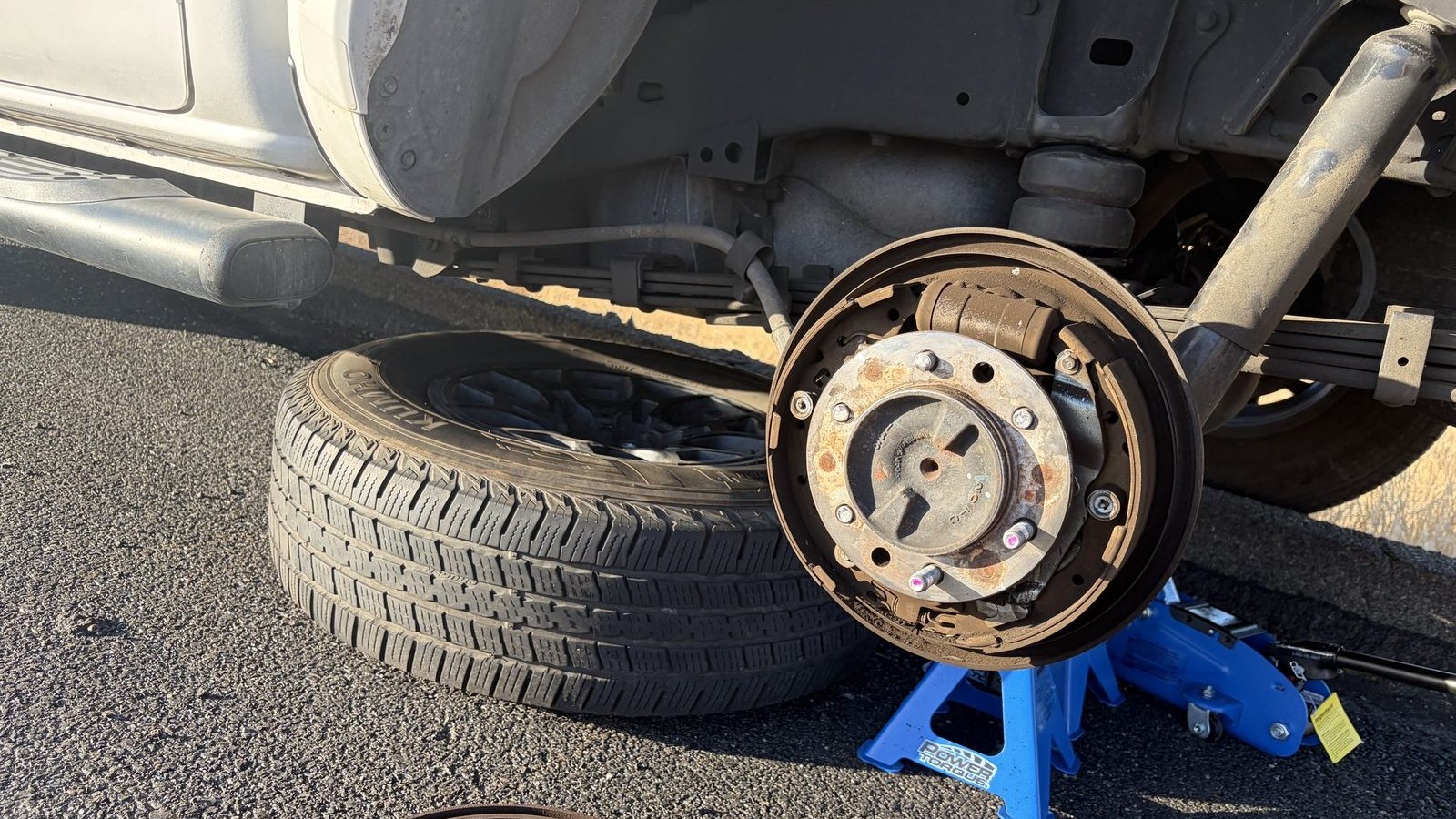
A standard brake job means pulling the wheel, removing the caliper, swapping the old pads for new ones, and checking the rotor surface and thickness along the way. If the rotor is too thin or warped from heat, it gets replaced instead of resurfaced, since there is only so much material to work with before it is unsafe to cut again. We check the caliper slides and hardware while things are apart, because a dry or seized slide pin causes uneven wear even with brand new pads installed correctly. Fluid gets checked too, topped off if it is low or flushed if it is overdue, since old fluid holds moisture that can affect how firm the pedal feels. This is the same process whether the car is parked in Kyle, Mountain City, or out toward Hays.
What changes the size of the job is how far things went before you called somebody to look at it. Pads alone is the simple version of a brake repair, quick to diagnose and straightforward to fix. Pads plus rotors is more common than most people expect, since most rotors are already too thin to resurface by the time the pads wear down to the metal. A caliper that is seized or leaking fluid adds a part to the job and some extra labor to swap it out and bleed the system after. Brake lines that are corroded or a master cylinder that is failing turns a routine brake job into a bigger repair involving the whole hydraulic system, not just the parts at the wheel. We walk through this with every driver we see from Kyle to Creedmoor so nobody is surprised by what the car actually needs.
If you are hearing grinding, feeling a pedal that sinks lower than it used to, or noticing the car pull to one side, do not wait on it and hope it fixes itself. Brakes do not get better on their own, they only wear further and the repair only gets bigger. Short trips at low speed around town are safer than highway driving if you absolutely have to get somewhere before we arrive to take a look. Avoid hard stops when you can and leave more room between you and the car ahead, since your stopping distance may not be what it used to be. Keep extra following distance until the work is done, whether you are driving through Uhland, Niederwald, or sticking close to home in Kyle.
Brake problems rarely show up all at once, they build slowly through thousands of stops until one day the pedal feels wrong or the noise is impossible to ignore. Catching the early signs, a squeal, a slight pull, a pedal that feels a little softer than last month, saves you from a bigger repair bill down the road and keeps the car safer in the meantime. We bring the tools and the parts knowledge to your driveway or office parking lot instead of making you drive on brakes you are not sure about. That matters most on a car you depend on every day for work, school runs, or getting around San Marcos and the rest of Hays County. A quick call to look at a noise now is a lot simpler than dealing with a caliper or rotor that failed because it went unchecked too long.
What to Tell Us When You Call
- Year, make, and model of the car
- What you hear or feel, like grinding or a soft pedal
- Whether it happens every stop or just sometimes
- Your location in Kyle or a nearby town
 Supercanic